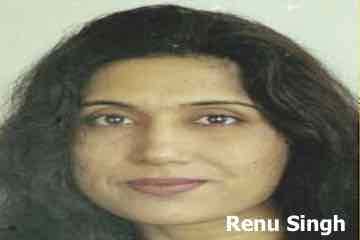

 by
| 1: Socrates and the Modern Search for Wisdom, 2. Emperor Ashoka and the Kingdom Without Walls, 3. Cleopatra and the Mirror of Alexandria, and 4. Saint Meera and the Return to the Real World |
| 1: Socrates and the Modern Search for Wisdom
The living room was quiet, lit only by the soft glow of a table lamp. Between Chiku and Pihu lay a homemade cardboard alphabet sheet and a small wooden planchet. “Hey Pihu, let’s play planchet tonight,” Chiku said casually, tapping the board. “We can call a spirit and have a real chat!” Pihu pulled her hands back, her eyes widening. “Are you crazy? I’m scared of ghosts, Chiku! What if something spooky stays in the room?” “Relax, it’s just a harmless game,” Chiku assured her with a confident grin. “Besides, the ghost only works as per our order; we ask the questions, and they have to leave the moment we say goodbye.” Still a little hesitant, Pihu nodded and rested her index finger on the wood beside his. “Alright, fine. Let’s call Socrates; and just don’t let him complain about hemlock again. Ask him something real.” They closed their eyes and whispered the invocation. Within seconds, the wooden planchet gave a sharp jolt, sliding briskly across the board: G-R-E-E-T-I-N-G-S / L-I-T-T-L-E / S-C-R-I-B-E-S A warm, contemplative voice echoed from the centre of the room. “I was just drifting through the glowing ether of your world. Tell me, children… why do so many mortals still argue over an old stone-carver from Athens who only ever asked awkward questions?” “Because you taught us how to think!” Chiku said proudly. “We have machines now that can answer almost anything in a heartbeat.” A quiet chuckle shimmered in the air. “Machines that map the stars, yet cannot map the human heart. Tell me, if you have all the answers at your fingertips, what keeps you awake at night?” Pihu leaned forward, pressing her finger firmly on the planchet. “Why are people still killing and dividing each other in the name of God? Doesn’t wisdom cure hatred?” The room grew chilly. The planchet froze. When Socrates spoke again, his voice was barely a whisper: “Men often drape their hunger for power in the sacred robes of divinity, child. It is far easier to worship a banner than to examine one’s own soul.” The planchet slid slowly, spelling out a chilling question rather than a prophecy: W-H-O / W-I-L-L / B-U-R-N / T-H-E / N-E-X-T / T-E-M-P-L-E Pihu’s throat tightened. “Is that a prediction? Will there be another world war over faith?” “I never claimed to know the future, little scribe,” Socrates said softly as the warmth returned to the room and his presence began to fade. “I only know that every great ruin begins when people stop asking why.” W-I-S-D-O-M / B-Y-E The planchet came to a gentle halt. Across the street, a loud argument erupted over a loudspeaker, and Chiku and Pihu looked at each other, neither of them reaching to turn on the television. *** 2. Emperor Ashoka and the Kingdom Without Walls Three nights later, Chiku adjusted his posture with mock royal solemnity. “Tonight, Pihu, we summon a monarch who ruled from sea to sea. Emperor Ashoka!” Pihu placed her finger beside his. “Let’s see what an ancient emperor thinks of modern borders.” They whispered the call. The planchet glided smoothly across the cardboard with measured, deliberate steps. A-S-H-O-K-A A deep sigh echoed through the room, heavy with centuries. “Why do you disturb the shadow of Kalinga?” Chiku leaned forward eagerly. “Great Emperor, two neighbours on our street have been fighting in court for ten years over a three-foot strip of land. Even nations are fighting over lines on maps. If you ruled today, how would you divide the land so everyone gets enough space to build their dream world?” The planchet paused. When the voice returned, it carried the quiet ache of hard-earned peace. “In my youth, I marched across rivers of blood to push my borders to the edge of the earth. Standing amidst the ashes of Kalinga, I realized I had swallowed an empire, yet starved my own soul.” “So, you gave up conquering?” Pihu asked softly. “I changed the battlefield,” Ashoka replied. “Land is a handful of dust; draw a line in it, and two men will bleed to move it an inch. But the human mind is an uncharted continent. No wall can divide it, no passport can restrict it, and no army can lay siege to the wonder it holds.” Chiku frowned. “But countries still need borders, don’t they? Without them, wouldn’t there be chaos?” Ashoka’s voice grew calm. “Borders may protect a nation, child, but they cannot protect a conscience. Walls may keep armies apart, yet they cannot make neighbours trust one another. Every map is drawn by human hands; compassion is drawn only in the human heart.” Pihu looked thoughtfully at the planchet. “Did you ever stop feeling guilty about Kalinga?” For a long moment, nothing moved. When Ashoka answered, his voice seemed to come from a great distance. “Not a single sunrise passed without reminding me of those who never saw another dawn. Victory can sound like celebration to the crowd and still echo like mourning within one heart. That is why I chose Dharma over conquest. I wanted my greatest victory to be over my own pride.” Chiku’s voice became quieter. “Then how do we build anything grand without more space?” A gentle warmth spread through the room. “Plant a seed of compassion in an angry heart, child, and watch how wide that territory grows. The greatest kingdoms are not measured in miles but in the number of lives made kinder by those who govern them.” The planchet moved once more. K-I-N-D-N-E-S-S / B-Y-E It slipped gently to the edge of the board and became still. The next morning, Chiku looked out of his bedroom window at the disputed wall between the two neighbours. Overnight, a wild jasmine vine had climbed over the old bricks, its white blossoms opening freely on both sides. Butterflies wandered across the wall without hesitation, as though they had never learned where one garden ended and another began. For the first time, the wall looked much smaller than the life growing across it. *** 3. Cleopatra and the Mirror of Alexandria A few nights later, the living room lamp was turned down low. Chiku and Pihu sat cross-legged on the rug, their fingers resting on the wooden planchet. “Tonight,” Chiku whispered, “the sovereign of the Nile. Queen Cleopatra!” Pihu rested her finger beside his. “Keep your questions sharp, Chiku. No silly jokes about movie stars.” They whispered the invocation. A cool breeze swept through the room, carrying the faint scent of papyrus and river reeds as the planchet traced a brisk, commanding arc. C-L-E-O-P-A-T-R-A A rich, melodic voice echoed from the centre of the room. “Who summons the ruler of Alexandria across the sands of time?” Pihu leaned closer, her voice hesitant. “Your Majesty… in our world, everyone is obsessed with filters, cameras, and looking flawless. History says your beauty made empires kneel. Sometimes, when I look in the mirror, I wonder how much easier life would be if I had a face like yours.” The planchet gave a sharp, almost amused twitch. “A face like mine?” Cleopatra laughed softly. “Roman coin-makers etched my likeness in bronze; a hooked nose, a strong chin, and watchful eyes. Even my enemies admitted it was never my face that captivated Julius Caesar or Mark Antony.” Chiku blinked. “Wait… the movies lied? Then why did Rome fear you?” “Because I spoke many languages without an interpreter, commanded a fleet, managed Egypt’s grain treasury, and debated the finest minds of my age,” Cleopatra replied. “History often finds it easier to admire a woman’s beauty than to acknowledge her intelligence. It comforts the defeated to believe they were enchanted rather than outwitted.” Pihu looked down at the planchet. “Then why do people still judge girls by their appearance?” For a moment, only the whisper of the evening breeze filled the room. “Every age has its mirrors,” Cleopatra answered. “Mine were polished bronze. Yours glow in the palms of your hands. The mirror itself has never been the danger. The danger begins when you allow it to decide your worth.” Chiku looked thoughtfully at his sister. “So, what should people really be trying to improve?” The Queen’s voice grew warm. “Sharpen your curiosity before your appearance. A beautiful face may open a door, but only an educated mind knows how to remain in the room. Beauty fades with time. Wisdom grows brighter each time it is shared.” The planchet moved swiftly. S-H-A-R-P-E-N / T-H-E / B-L-A-D-E / W-I-T-H-I-N “A reflection in bronze or glass belongs to whoever stares at it,” Cleopatra murmured as the scent of river reeds began to fade. “Only your intellect, your courage, and your character truly belong to you.” W-I-S-D-O-M / B-Y-E The planchet stopped. For a long moment, Pihu remained silent. Then she reached for her phone—not to open the front camera, but to download the linguistics book she had been putting off all week. As the screen lit up, her reflection disappeared behind the words she had chosen to learn. ** 4. Saint Meera and the Return to the Real World The evening lamp cast a warm, golden glow across the floor. Chiku’s shoulders slumped as he rested his fingers on the wooden planchet. “Let’s call Saint Meera Bai,” Chiku murmured. Pihu placed her finger beside his, watching her brother’s downcast face. They whispered the call. The planchet glided in a soft, rhythmic curve across the cardboard. M-E-E-R-A The faint, sweet chime of ankle bells filled the room. It sounded as though someone was walking through a temple courtyard beneath the moonlight. A voice followed, gentle and joyful. “Prabhu mero Jugal Kishore… Who calls upon a wandering singer?” Chiku swallowed hard. “Revered Meera… my grandparents left for their pilgrimage to Pandharpur this morning. The house feels hollow without them. And outside, people on the news are shouting and fighting over whose temple or shrine is greater. If faith makes people leave their homes or fight their neighbours, why do we need it at all?” The planchet paused. When Meera spoke again, her voice felt like cool water on warm stone. “Your grandparents have not left you, little one. They have merely gone to sing to the Beloved with a thousand other joyful feet. Longing is simply love stretching across distance.” Chiku looked down. “But why does love sometimes hurt so much?” “Because love makes the heart larger,” Meera replied. “A larger heart feels both joy and separation. But even longing can become a prayer when it is filled with kindness.” Pihu leaned closer. “Meera Bai, people know your songs, but many do not know your story. Did people understand you when you were alive?” The room grew quiet. “I was born into a royal family of Mewar,” Meera said softly. “Many expected me to live only according to the rules written for a princess. But my heart had already chosen another path. I sang for the Divine, cared for the forgotten, and refused to believe that love belonged to only one group of people.” The chime of ankle bells became slightly louder. “Some people feared a love they could not control. They locked my doors and sent me a cup of poison because my song did not match theirs. But a song loses its sweetness the moment you force another throat to sing it.” Pihu looked troubled. “Then why do people still fight in the name of faith? Why do they forget love?” The planchet moved slowly across the alphabet sheet. F-A-I-T-H / I-S / A / S-O-N-G / N-O-T / A / S-W-O-R-D “True devotion never needs a weapon, child,” Meera said. “A lamp does not prove its brightness by putting out another lamp. A river does not become greater by drying another river. Love grows when it gives, not when it conquers.” Chiku lifted his eyes. “Can people have different beliefs and still be friends?” “Of course,” Meera replied. “The sky welcomes every bird’s song. The earth holds every traveller’s footsteps. Human beings create walls where nature creates harmony.” The children remained silent. Then Pihu whispered, “What should we do when we see hatred around us?” Meera’s voice became softer. “Begin with the person beside you. Offer kindness before judgement. Listen before arguing. The world is changed not only by kings and warriors, but by ordinary hearts that choose compassion every day.” The planchet moved once more. L-O-V-E / B-Y-E The sweet chime of ankle bells slowly faded into the evening air. The planchet stopped. For a long moment, neither child moved. Then Pihu slowly pulled her fingers away from the wood, glancing at the dark shadows in the hallway. “Let’s put this away, Chiku,” she whispered. “I saw Socrates in my dreams last night, and Cleopatra the night before. If we keep calling ghosts to fix our questions, we’ll forget how to live out there.” Chiku smiled faintly. “Maybe they didn’t come to give us answers. Maybe they came to teach us how to find them.” Together, they folded the cardboard sheet and placed the wooden planchet carefully in the bottom desk drawer. The next morning, Chiku saw his grandparents’ empty chair in the courtyard. For a moment, sadness returned. Then he noticed a small bird sitting on the window ledge, singing without fear. He smiled. Some journeys take people away. Some songs bring them closer. The children switched on the bright lights and stepped back into the noisy, unfinished world outside. |
|
*’ਲਿਖਾਰੀ’ ਵਿਚ ਪ੍ਰਕਾਸ਼ਿਤ ਹੋਣ ਵਾਲੀਆਂ ਸਾਰੀਆਂ ਹੀ ਰਚਨਾਵਾਂ ਵਿਚ ਪ੍ਰਗਟਾਏ ਵਿਚਾਰਾਂ ਨਾਲ ‘ਲਿਖਾਰੀ’ ਦਾ ਸਹਿਮਤ ਹੋਣਾ ਜ਼ਰੂਰੀ ਨਹੀਂ। ਹਰ ਲਿਖਤ ਵਿਚ ਪ੍ਰਗਟਾਏ ਵਿਚਾਰਾਂ ਦਾ ਜ਼ਿੰਮੇਵਾਰ ਕੇਵਲ ‘ਰਚਨਾ’ ਦਾ ਕਰਤਾ ਹੋਵੇਗਾ। |
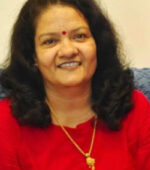
Prof. (Dr) Sangita Ghodake,
Department of English
PDA'S Prof. Ramakrishna More ACS College (Autonomous), Akurdi, Pune -411044, India,
sangita.ghodake@gmail.com, sangita@pdearmacs.edu.in.
+91 9890695583
***
Academic Qualifications
| Degree | University | Year | Subject |
| Ph. D. | Pune University | 2007 | English |
| MS.CIT. | … | 2004 | Information Technology |
| M. Phil. | Shivaji University | 2002 | English |
| SET | … | 1999 | English |
| M. A. | Pune University | 1996 | English |
| B. A. | Pune University | 1994 | English |
Ph. D. Thesis: Treatment of Childhood and Youth in Selected Post Colonial Fiction
- Phil: Portrayal of Childhood in Selected Fiction of Nadine Gordimer
- Working as an Associate Professor at Department of English, Prof. Ramkrishna More
College, Akurdi, Pune, since 22nd November 2011
- Worked as Lecturer at Department of English, Mamasaheb Mohol College, Pune from November 1999 to November 2011
- Worked as Lecturer at Department of English, Rayat Shikshan Sanstha, Satara from August 1996 to November 1999
Published Papers in Journals:
- Innovative techniques in teaching Drama, January 2007
The Role of Teacher in the Teaching of Drama
- Hindustani Innovator: The Biannual of Hindustani Soul and Psyche
V-III, July 2007
Initiation into Life-NGUGI’S Novels
- Bharati Vidyapeeth University Research Journal
V-1, October 2008
Innovative Techniques in the Teaching of Drama.
- Literary Cascades (2008)
Parent Child Relationship in Caribbean and African Literature in the Postcolonial Period (ISBN 978-81-89131-241)
- Trajectory : A Biannual Journal of Research Articles, December 2008
Violence in Colonial Africa : Reflected Through Tears of the Colonized authors Nadine Gordimer and Ngugi wa Thiong’
- Academic Research: Half Yearly Journal in Languages and Humanities
V-I, November 2008 (ISSN 2230-7796) Indian English Poetry on the Threshold of 21st Century : A.K. Ramanujan’sUncollected Poems and Prose
- Academic Research: A Half Yearly Journal in Languages and Humanities
V-2, November 2009 (ISSN 2230-7796)
The Caribbean Creolucultural Identify Reflected in the fiction of George Lamming and V.S.Naipaul.
- New Horizons : A Research Journal
Volume- III, July 2010
Heartbeats from the East: Naipaul’s Trilogy on India
- Contemporary Discourse : A Peer Reviewed International Journal
Volume –II Issue- I, January 2011 (ISSN 0976-3686)
Colonial and Postcolonial Kenya and South Africa: A Study Nadine Gardimer and Ngugi Thiong’O
- G.C. Sponsored 2nd National seminar:
Bharati vidyapeeth – Yashwantrao Mohite College, Feb 2011
Postcolonial Ethos in J.M.Coetzee’s Fictional Autobiography
- Research Drops : A Peer Reviewed International Journal
Volume – I Issue- I, March 2011 (ISSN 2231-105X)
Heart Beats of East Land: V. S. Naipaul’s Trilogy on India
- Research Drops : A Peer Reviewed International Journal
Volume – I, September 2011 (ISSN 2231-105X)
Transcultural Encounters in Afro-Caribbean selected Fiction of J. M. Coetzee and V. S. Naipaul
- Modern Approaches to Indian Fiction in English- 2012 (ISBN 978-81-907408-4-5)
India Beyond India in A House For Mr.Biswas By V.S.Naipaul
- Souvenir:U.G.C. Sponsored National Seminar(ISBN 978-81-923438-0-8)
Bharati vidyapeeth – Yashwantrao Mohite College, Feb 2012
Collective Unconscious in the Mahabharata and in a Hindi Movie Rajneeti
- CILH: Contemporary issues in Languages and Humanities
Volume-II, June 2012 (ISSN 2249-9792)
Pedagogy of the Oppressed in Selected Caribbean Colonial Fiction
- Academic Research: A Half Yearly Journal in Languages and Humanities
V-7, November 2012 (ISSN 2230-7796)
Jean-Jacques Rousseau and Rabindranath Tagore: Proponents of Nature as an Educator
- International Journal of Business Management and Social Services (IJBMSS)
Volume II Issue 7, March 2013 (ISSN 2249-7463)
Challenges of Higher Education in India
- Maharashtra after Independence
State level seminar under QIP
Volume II, March 2013 (ISBN 978-81-923914-1-0)
Postcolonial Theory and its Application on Kamala Markandaya’s Nectar in a sieve
- Proceedings of International Conference on A Turbulent Voyage of Rights for Humanity on 5th October 2013 by K. B. P. College of Arts and Commerce for Women, Thane, Mumbai
ISBN 978-83-5142-130-6
Consequences of Marginalization on Upbringing of Children
- Critical Space, A Peer Reviewed International Refereed Journal in language, Literature and Culture, October 2013, Vol. II, Issue 3
ISSN- 2319-3689
Gordimer’s My Son’s Story and Shakespeare’s The Tempest: A Shift from Eurocentrism to Humanism
- Proceedings of International Conference on Arts and Humanities TIIKM, Colombo, Sri Lanka on 2nd and 3rd April, 2014
ISBN 987-955-4903-06-7
ISSN- 2357-2728
‘Words of Practical Wisdom’ in Indian Folklore Pancatantra
- Linguistic and Literature Studies 2(6): 167-172, 2014, Horizon Publication, The USA
Doi: 10.13189/ IIs. 2014. 020602
Title of the Paper: A Journey from the Shipwreck to the Salvage in Nadine Gordimer’s Selected Short Stories, pp. 167-272
http://www.hrpub.org
- Asian Journal of English Studies, Vol. No. 3, Issue No. 3, ISSN 2277-3606, July 2014
Title: Exploring Pearls of Practical Wisdom through the Indian Folklore Panchtantra, pp. 41-51
- Langlit, An International Peer-Reviewed Open Acess Journal, ISSN 2349-5189
August, 2014
Title: Lenny’s Initiation into Life: Bapsi Sidhwa’s Ice-Candy-Man and Deepa Mehta’s Movie 1947: Earth, pp.
- Journal of Higher Education and Research Society, ISSN 2349-0209, Issue-1, Volume-3, October 2014
Title: Critiquing the Fourth World Indegenous Tribal Cultural Identity in Afro- Asian Literature, PP. 466-472
- European Academic Research, Vol. 2, Issue 10, January 2015, ISSN 2286-4822
Impact Factor: 3.1 (UIF), drji Value: 5.9 (B+)
Title: “India” inthe Eyes of Migrated Indian Nobel Laureates V. S. Naipaul and Amartya Sen, pp. 13027-13038
- Colonial Ideology and Princely States in India/4 (Special Issue), ISSN 2394-207X (print)
Title: The Wretched of the Colonial Africa: With Special Reference to Ngugi Wa Thiong’o and Nadine Gordimer, pp. 178-185
- CTBC’s IRJ Vo. 2/ Issue 4 (special issue) February, 2015. ISSN 2350-0905
Title: Multicultural Assimilation and Aculturation in J. M. Coetzee’s Semi-Autobiographical Trilogy, pp. 157-162
Recent Journals in Other then India Journals:
- European Academic Research. Impact Factor 3.1 UIF.DRJI Value 5.9 (B+),
Vol. II. Issue 10, Jan 2015, ISSN 2286-4822. http://euacademic.org/UploadArticle/1262.pdf
“India” in the Eyes of Migrated Nobel Laureates V. S. Naipaul and Amartya Sen
- Linguistics and Literature Studies. Horizon Research Publishing.
USA, August, 2014. 2(6): 167-172, 2014 DOI: 10.1389/IIs. 2014.020602. http://www.hrpub.org
A Journey from the Shipwreck to the Salvage in Nadine Gordimer’s Selected Short Stories
Books Published as single author or as editor:
- Post-Colonial South African Fiction, pages 200, Pune: Scion Publication, 2014
ISBN:978-93-81351-12-3
- Post-Colonial Caribbean Fiction, Pages 178, Pune: Scion Publication, 2013
ISBN:978-93-81351-15-4
Ongoing and Completed Research Projects and Consultancies:
- Completed: Minor Research Project: Education Scenario in Selected Caribbean Fiction, Sponsor: UGC, New Delhi, Period: 2011-13, Grants: 40000/-
- Completed: Minor Research Project: Discovery of India through V. S. Naipaul’s Trilogy on India, BCUD, University of Pune, Period: 2011-13, Grants: 75000/-
Research Guidance:
Recognized Guide in Pune University, Tilak Maharashtra Open University and JJT University, Mumbai
- Seven Students Completed M. Phil. introduced by Y.C.M.O.U., Nashik
- Seven are Pursuing Ph. D. by University of Pune, Pune
Papers presented in Conferences, Seminars, Workshops, Symposia: (2009-2013)
- Many (more than thirty) papers presented in international, national and regional conferences, seminars, symposia etc.
Papers presented in Conferences, Seminars, Workshops, Symposia: (2009-2015)
- Poster Presented entitled Post- Empire Legacy in V. S. Naipaul’s Non-Fiction on India international conference on ‘Post-Empire Imaginaries’, at Berne University, Switzerland, 18-29 May 2012
- Paper Presented Entitled Words of Practical Wisdom in Indian Folklore ‘Panchtantra’in international conference on ‘Arts and Fine Arts’ Colombo, Sri Lanka, 2-4 April 2014
- Ppaper presented entitled A Journey from the Shipwreck to the Salvage in Selected Stories by Nadine Gordimer in international conference on ‘Unbraiding Short Story’, in Vienna University, Austria, 16-19 July 2-14
National and International Professional Bodies:
- One of the Referees: “International Peer Reviewed Interdisciplinary Journal “Vision”
- Member, Organizing Committee, ICOAH, TIIKM, Colombo, Sri Lanka
- Member, Scientific Committee, ICOACH, TIIKM, Colombo, Sri Lanka
- Member, International Society for Development and Sustainability (ISDS), Japan
Guest Lectures:
- Delivered more than twenty Guest Lectures in Conferences and in Colleges
Session Chair:
- Chaired the session in the International Conference on 16-19 July 2014 at Vienna University, Austria
- Chaired a Session in International Conference on 2-4 April, 2014at Colombo, Sri Lanka
Extension Work:
- Community Services: N. S. S. Program Officer for the academic Years 1999-2000, 2000-2001, 2001-2002, reappointment as N. S. S. Program Officer for the academic Year 2006-2007. Extra-Curricular Activities in the college committee and in the society
- Award and felicitation for the ‘work in education’ by Rotary Club, Chinchwad, Pune
Date of Birth: 21st January 1967
Languages known: Hindi, English, Marathi